Disclaimer: This is not a religious blog, I decided to share the following journal entry due to its philosophical nature in hopes of creating discourse.
An entry from my journal:
The Abrahamic religions insist that reverence is the highest demand of their God, that worshiping Him is humanity’s ultimate purpose, and that failure to do so means eternal damnation. This God is hailed as just, merciful, and forgiving—but how can anyone believe these lies? What kind of just or merciful being creates humanity solely to praise Him, threatening eternal suffering if they don’t? What forgiving deity places us in a world overflowing with pain and cruelty, a world He Himself designed? It is not humanity that owes Him forgiveness—it is He who owes us.
This world of suffering is His creation. The temptations, the evils, the misery—He made them all. And for what? A sadistic game to test humanity, a game stacked against us. He creates a devil to tempt us, then blames us for being tempted. He punishes us for the natural desires He built into us. What kind of twisted ego invents a game like this, where the rules demand we forego pleasure, deny joy, and devote ourselves entirely to Him or face eternal torment? These aren’t the actions of a loving creator. They are the schemes of a tyrant.
God is not deserving of worship—He is the one who has damned us. He created the suffering, the evil, the misery, and then demands our praise for it. Better to have never existed than to live in this cruel design. God is dead, not because we have killed Him, but because He has killed Himself with His contradictions, His cruelty, and His indifference. He has abandoned us, and we owe Him nothing.
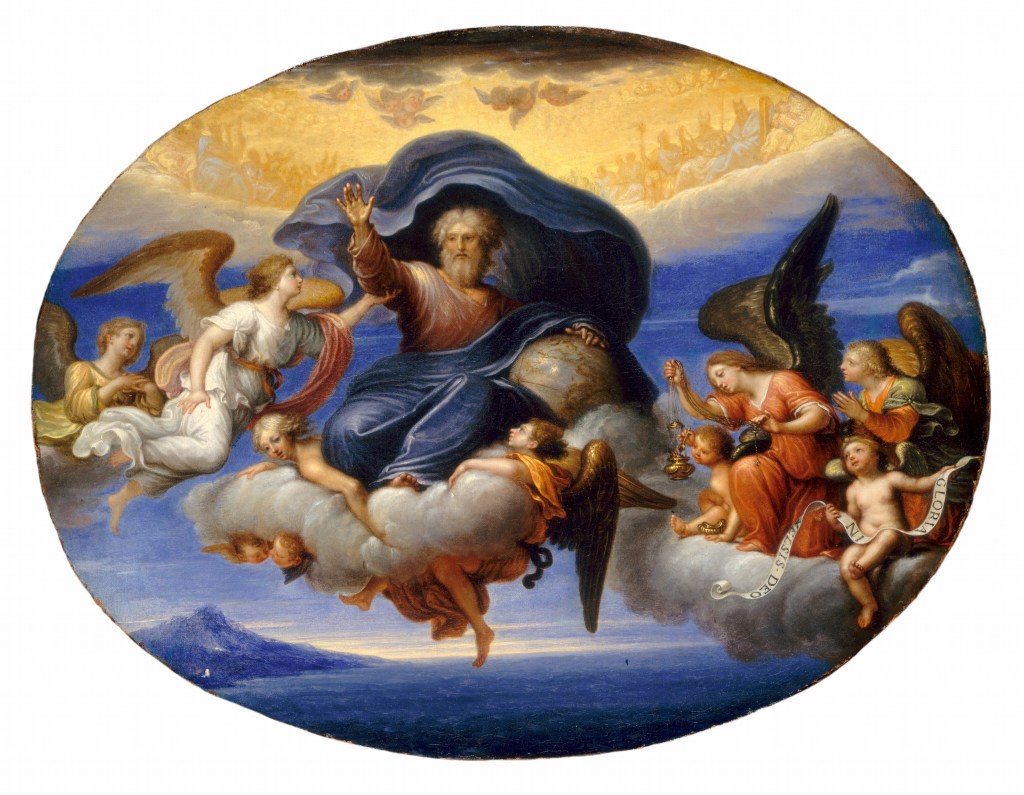
The rebuttal:
The Abrahamic religions insist that God demands worship and obedience, yet what if this demand isn’t about His ego but about humanity’s growth? Worship might not be for His benefit but for ours—a means to align with something greater, to find purpose beyond ourselves. They call Him just and merciful, and while suffering exists, could it not be the consequence of free will, a necessity for love, courage, and virtue to have meaning? Perhaps what seems like punishment is less about cruelty and more about correction—a path to something higher.
The devil, temptation, and evil—these are often seen as creations of God, but what if they symbolize the choices inherent in free will? Without the capacity for wrong, right has no value. And self-denial? It’s not oppression but liberation from harmful attachments, prioritizing lasting fulfillment over fleeting pleasure. Life’s tests are not sadistic games but opportunities for growth, resilience, and self-discovery.
To call God egotistical or cruel assumes that human understanding can fully grasp divine motives. Perhaps what feels unjust to us is part of a greater plan we cannot see. Despite its challenges, existence is a gift—a canvas for love, learning, and meaning. To claim it’s better never to have existed is to overlook the beauty that can emerge even in hardship.
God is not dead, nor has He abandoned us. What seems like a contradiction may be a reflection of our limited perspective, and what feels like indifference could be the trust placed in us to choose, to grow, and to seek what is good. Perhaps the divine is not a tyrant but a teacher, not a jailer but a guide.
Reflection:
My view of God’s purpose for us has shifted, shaped by personal growth and the trials that forge character. With each hardship, I see the intent behind what He has set before us more clearly, though the divine remains beyond complete comprehension. Just as a child matures and comes to understand the discipline of a parent, I, too, begin to grasp the meaning in the hardships our Father places in our path. Pain and struggle are not punishments but tools—like a whetstone sharpening a blade. To refine our minds and character, we must face the grind, allowing it to strip away what dulls our edge.
Sin, though alluring and pleasurable, harms us deeply—both in the physical world and, more profoundly, in the spiritual sense. In the physical realm, sins hinder our growth and well-being: gluttony and sloth weaken our health, while wrath and lust fracture our relationships. Yet the more significant harm lies in the spiritual realm, where sin severs our connection to God, the guiding compass toward righteousness. This separation leads us astray, pulling us into further sin and setting off a destructive feedback loop that spirals into the downfall of our lives. Without God’s guidance, we lose our way, compounding the harm sin inflicts upon us.
Sin is merely the absence of virtue, as darkness is the absence of light. Sin lures us because it is the path of least resistance, the effortless pull away from virtue. To overcome sin is not to fight it but to fill the void with virtue, letting light dispel the shadows.
 Modern Meditations
Leave a comment